CBT-I: the first-line treatment for chronic insomnia
What CBT-I consists of, why restricting time in bed works, how it differs from sleep hygiene, and who should not apply it unsupervised.

Key points
- CBT-I is the FIRST-LINE treatment for chronic insomnia in every major international guideline, ahead of medication.
- It has five components: sleep restriction · stimulus control · relaxation techniques · cognitive therapy · sleep hygiene.
- ⚠️ Sleep hygiene ON ITS OWN is NOT recommended. It is a supporting component, not a method, and this is the part most articles online leave out.
- The effect holds after the course ends, unlike medication.
- ⛔ Sleep restriction has real contraindications: epilepsy, bipolar disorder, excessive daytime sleepiness, and work requiring absolute alertness.
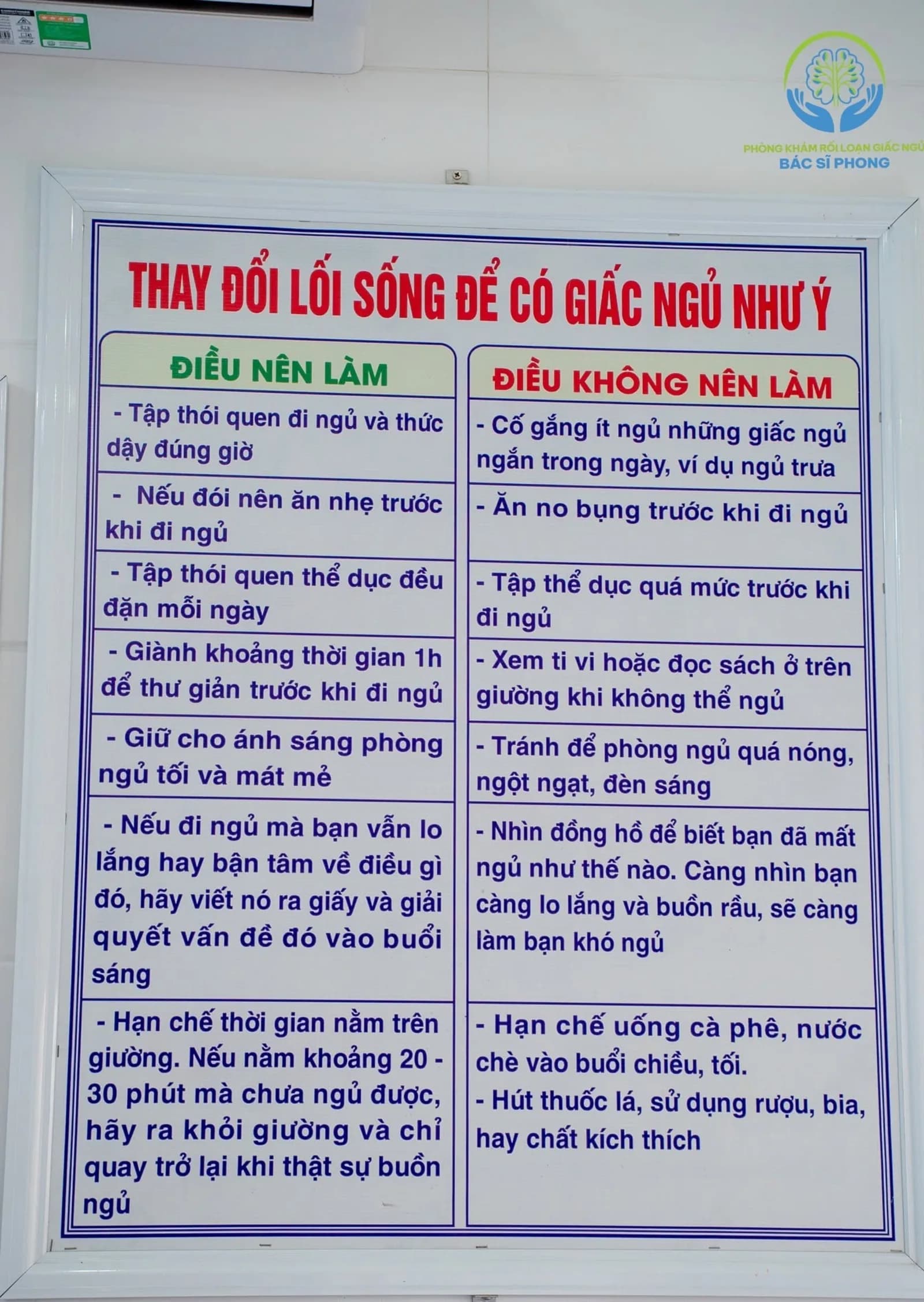
The five components
| Component | What it involves | Which mechanism it targets |
|---|---|---|
| Sleep restriction | Narrow time in bed to close to actual sleep time, then widen it gradually | Rebuilds sleep pressure that is being diluted by lying awake |
| Stimulus control | Go to bed only when sleepy; leave the bed if you cannot sleep; the bed is for sleep only; fixed wake time | Unlearns the association between the bed and being awake |
| Relaxation techniques | Slow breathing, progressive muscle relaxation, attention training | Lowers physiological arousal |
| Cognitive therapy | Re-examine the beliefs about sleep that raise anxiety | Breaks the worry-cannot-sleep loop |
| Sleep hygiene | Light, caffeine, alcohol, temperature, noise, screens | Removes obstacles. Necessary, but NOT sufficient on its own |
Why the two behavioural components are so powerful
Sleep is driven by two systems. One is sleep pressure, which builds with the hours you are awake and is discharged by sleeping. The other is the body clock, which decides at which point in the day you are able to fall asleep. People with chronic insomnia usually weaken both systems at the same time, without realising it.
- Spending 10 hours in bed to get 5 hours of sleep means 5 hours lying awake. Those five hours should have been building sleep pressure for the following night, but they were spent in bed instead.
- Sleeping in at the weekend, napping in the day, going to bed early after a bad night: all three blur the body clock's signal.
- And after hundreds of nights of turning over, the act of lying down itself becomes the cue that starts the worrying.
Sleep restriction attacks the first point, stimulus control attacks the second and third. That is why these two apparently simple techniques are more powerful than any amount of advice about curtains and herbal tea.
Why the first week is harder
The initial sleep window is set close to your ACTUAL sleep time, not the time you would like to sleep. For someone currently getting 5 hours, that means about 5 hours 30 in bed. In the first week you will be sleepier during the day, and that is the point: it concentrates sleep pressure until the body has no room left for lying there turning over.
Who should NOT apply sleep restriction on their own
- Anyone with seizures or epilepsy. Sleep loss lowers the seizure threshold.
- Anyone with bipolar disorder. Sleep loss can trigger a manic phase.
- Anyone with excessive daytime sleepiness, or suspected sleep apnoea.
- Long-distance drivers, machine operators, or anyone whose work demands absolute alertness during the early stage.
- Pregnant women. The method needs adapting rather than applying as written.
What CBT-I improves, and what it does NOT
This needs saying plainly, because the wrong expectation is what makes people give up. CBT-I does not make you sleep several hours more. In meta-analyses the increase in total sleep time is a matter of minutes and often does not reach statistical significance; time to fall asleep shortens by somewhat over ten minutes.
What it clearly improves is insomnia severity on validated scales, the proportion of people reaching remission, sleep efficiency, and time spent awake in the middle of the night. In other words: sleep becomes more compact, more continuous and far less distressing, rather than longer.
Should CBT-I be combined with medication?
In April 2026 the American Academy of Sleep Medicine published a guideline devoted to this question, and its conclusion has two halves.
- Compared with medication alone: combining CBT-I with medication is recommended, because the combination improves several measures more clearly.
- Compared with CBT-I alone: adding medication is recommended against. Adding a medicine does not produce better results than CBT-I by itself.
Both are conditional recommendations, meaning different patients may reasonably choose differently. But the overall direction is clear: if CBT-I is done properly, adding medication buys nothing further.
Compared with sleep hygiene
Almost every Vietnamese article about "treating insomnia without medication" is in fact only about sleep hygiene: a dark room, no coffee in the afternoon, no phone before bed. Those things are true. But international guidelines state explicitly that sleep hygiene used on its own is not recommended for chronic insomnia, because the evidence shows it is not enough.
The difference is that sleep hygiene removes the things that get in the way of sleep, while the two behavioural components release the mechanism that is holding insomnia in place. Clearing the obstacles is not enough while the brake is still on.
Frequently asked questions
- How long does CBT-I take?
- A full course is usually 6 to 8 sessions over 6 to 10 weeks. Most people see a clear change after 4 to 6 weeks.
- Can I follow it from a book?
- Stimulus control and sleep hygiene can largely be done alone. Sleep restriction is better supervised: the window has to be calculated from your own diary, adjusted weekly, and it has real contraindications.
- Can I do CBT-I while taking sleeping pills?
- Yes, and this is the right order: build the behavioural foundation first, reduce the dose afterwards. Tapering before any behavioural tools are in place is the most common reason coming off fails.
- What if CBT-I does not work for me?
- The first thing to do is revisit the diagnosis. Insomnia that does not respond is often a sign of another sleep disorder that has not been recognised, or of depression, anxiety or chronic pain that has not been addressed.
References
- Behavioral and psychological treatments for chronic insomnia disorder in adults: an AASM clinical practice guideline - American Academy of Sleep Medicine, 2021 · DOI 10.5664/jcsm.8986
- Combination treatment for chronic insomnia disorder in adults: an AASM clinical practice guideline (published 13 Apr 2026; the link goes to the society's announcement, the original is behind a paywall) - American Academy of Sleep Medicine, 2026 · DOI 10.1007/s44470-025-00038-8
- Initial treatment choices for long-term remission of chronic insomnia disorder in adults: a systematic review and network meta-analysis - Journal of Sleep Research, 2025
- Management of Chronic Insomnia Disorder in Adults: A Clinical Practice Guideline from the American College of Physicians - American College of Physicians, 2016 · DOI 10.7326/M15-2175
- The European Insomnia Guideline: An update on the diagnosis and treatment of insomnia 2023 - European Sleep Research Society, 2023 · DOI 10.1111/jsr.14035
- Insomnia - NHS (Anh), 2026